

5 Fascinating Facts About the Vatican
Author Tony Dunnell
June 24, 2024
On June 7, 1929, the Italian dictator Benito Mussolini signed a treaty that established the independent state of Vatican City. With this act, the Holy See — the government of the Catholic Church, led by the pope — finally had an official home. The Vatican had existed since the ancient Roman Republic, and had served as the capital of the Papal States, but it was only in 1929 that its geographic and political boundaries were defined.
With the creation of Vatican City, a true geographical oddity was born. The most famous fact about the Vatican is likely its status as the world’s smallest fully independent nation-state. No country in the world comes close to matching the Vatican’s minuscule population, which stands at less than 800 people, nor its tiny size, with an area of just 121 acres (49 hectares) — about one-eighth the size of New York City’s Central Park. Yet within this small space sit some of the world’s most spectacular religious and cultural sites, including St. Peter’s Basilica, the Sistine Chapel, the Vatican Apostolic Library, and the extensive Vatican Museums. Here are some more fascinating facts about the Vatican, from the elite soldiers who guard the pope to a papal telescope in an unlikely locale.

The Vatican Is Protected by One of the World’s Oldest Military Units
The Pontifical Swiss Guard has protected the pope since 1506. Consisting of between 110 to 125 soldiers, it is often considered one of the smallest armies in the world. It is also one of the oldest military units in continuous operation, originating with the Swiss mercenaries recruited by former popes during the Italian Wars (1494 to 1559). Today, members of the Swiss Guard are some of the most famous and recognizable residents of the Vatican. In their distinct dress uniforms of blue, red, orange, and yellow, and often wielding halberds, they are an impressive sight. But they are not simply ceremonial. The Swiss Guard is an elite military corps, and competition for inclusion among their ranks is fierce. New recruits must be unmarried Roman Catholic males with Swiss citizenship aged between 19 and 30 years old — and they must be both capable and willing to protect the pope with their lives.
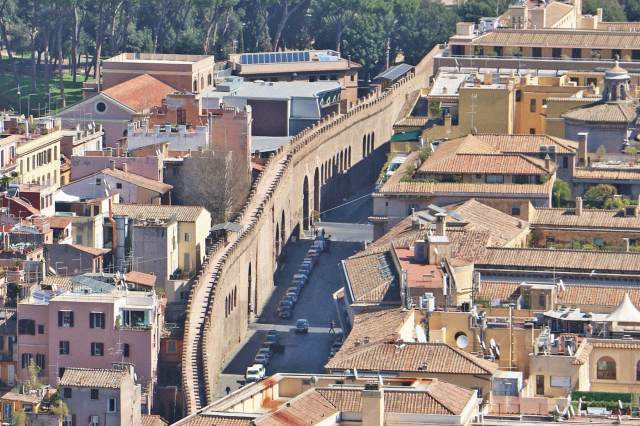
The Pope Has a Hidden Escape Route Through the Vatican
The Vatican is connected to the Castel Sant’Angelo in Parco Adriano, Rome, by what looks like a walled fortification. Inside the wall, however, is an elevated passageway that stretches for about half a mile. Known as the Passetto di Borgo, it has served as the pope’s hidden escape route for hundreds of years (the current structure dates back to 1277). On at least two occasions, it has helped save the leader’s life. In 1494, Pope Alexander VI used the Passetto to escape to safety during the invasion of Charles VIII of France. Not long after, in 1527, Pope Clement VII fled through the passageway during the Sack of Rome, when forces of the Holy Roman Emperor Charles V rampaged through the city. The Swiss Guard fought bravely — and was ultimately massacred — while buying enough time for Pope Clement to escape to the safety of Castel Sant’Angelo.
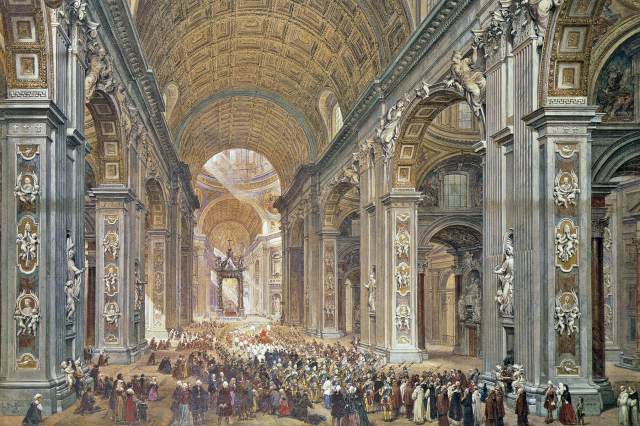
The Vatican Museums Stretch for More Than 4 Miles
The Vatican is home to an immense museum complex called the Musei Vaticani. Founded in the 16th century by Pope Julius II, the public museums have amassed a huge array of artifacts over the centuries, collected by subsequent popes. Taken in its entirety, the complex consists of 26 museums whose combined halls and galleries stretch for around 4.3 miles and contain some 70,000 exhibits. Arguably the most famous of all the priceless masterpieces is the Sistine Chapel, with its ceiling and altar wall decorated by Michelangelo. The chapel is the last room visited on a tour of the museum complex.
Advertisement
Related:9 World War II Facts Every History Buff Should Know
The Vatican Has a Zero Birth Rate
It’s hard to imagine a country having a birth rate of zero, but then the Vatican isn’t a regular country. First, there are very few women in the Vatican. Figures released in 2011 revealed that there were only 32 female citizens among the Vatican’s population, compared to 540 men (and one of the women was a nun). Further contributing to the zero birth rate is the fact that the Vatican has no hospital, meaning that births take place outside the city-state. Gaining citizenship, therefore, is not dependent upon being born in the Vatican, but is instead granted by the papal powers that be.
Advertisement
Advertisement
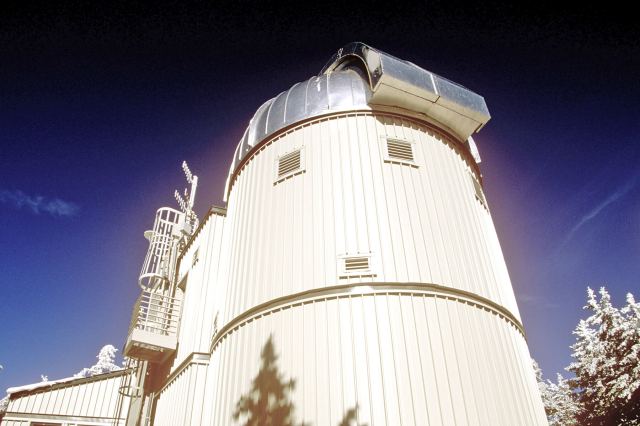
The Vatican Owns an Observatory in Tucson, Arizona
Religion and astronomy haven’t always been easy bedfellows (just ask Galileo), but the Vatican is nonetheless home to one of the oldest astronomical institutes in the world. Pope Leo XIII formally founded the Specola Vaticana (Vatican Observatory) in 1891, then located on a hillside behind the dome of St. Peter’s Basilica. But as Rome grew, increased smog and sky glow forced the Vatican to move its observatory just outside the city. By 1961, however, light pollution again hindered the functionality of the observatory. The Vatican therefore took a major step and opened a second research center in Tucson, Arizona. To this day, the Vatican Advanced Technology Telescope remains operational atop Mount Graham outside Tucson.