

5 Facts About the Golden AGE of Radio
It’s easy to take for granted today, but the emergence of broadcast radio was a seismic shift in early 20th-century culture. Born out of ship-to-shore wireless telegraph communication at the turn of the 20th century, broadcast radio represented an entirely new pastime by the time it began to mature in the 1920s. The golden age of radio was the period from the 1920s to the 1950s when the medium was at its absolute peak in both program variety and popularity. Radio grew massively during this era: In 1922, Variety reported that the number of radio sets in use had reached 1 million. By 1947, a C.E. Hooper survey estimated that 82% of Americans were radio listeners.
In addition to the music, news, and sports programming that present-day listeners are familiar with, radio during this period included scripted dramas, action-adventure series such as The Lone Ranger, science fiction shows such as Flash Gordon, soap operas, comedies, and live reads of movie scripts. Major film stars including Orson Welles got their start in radio (Welles became a household name in the wake of the infamous panic sparked by his 1938 broadcast of The War of the Worlds), and correspondents such as Edward R. Murrow established the standard for broadcast journalism. President Franklin D. Roosevelt used the medium to regularly give informal talks, referred to as fireside chats, to Americans listening at home. But radio was also largely influenced by advertisers, who sometimes wielded control of programming right down to casting and the actual name of the program, resulting in some awkward-sounding show titles, such as The Fleischmann’s Yeast Hour. The golden age of radio was a combination of highbrow and lowbrow content, offering both enduring cultural touchstones and popular ephemera — much like the television that eclipsed it. Read on for five more facts from this influential era.
You may also like
- Why Were Old Bridges Covered?
- Why Did Doctors Wear Beak Masks During the Bubonic Plague?
- Revealing Facts About 5 Celebrated Painters
Advertisement
The First Commercial Jingle Aired in 1926
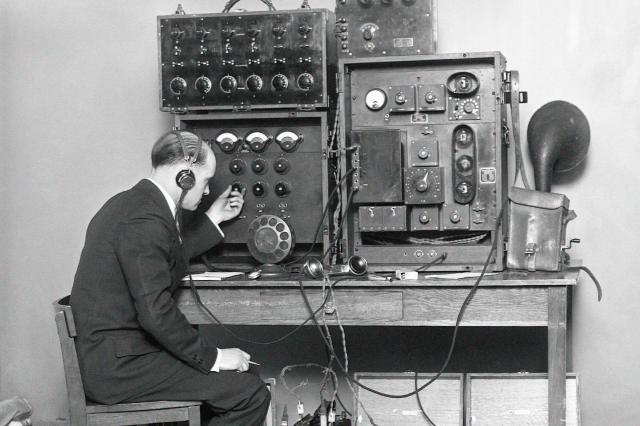
The first known radio advertisement was a real-estate commercial for the Hawthorne Court Apartments in Jackson Heights, Queens, broadcast by New York station WEAF in August 1922. There’s a bit of disagreement over whether the duration of the ad was 10 minutes or 15 minutes, but fortunately for listeners, it wasn’t long before the ad format was pared down considerably. In 1926, when General Mills predecessor Washburn-Crosby was looking for a way to boost the languishing sales of Wheaties, it turned to its company-owned radio station in Minneapolis (WCCO) for what ended up being a much shorter form of commercial. WCCO head of publicity Earl Gammons wrote a song about the cereal called “Have You Tried Wheaties?” and Washburn-Crosby hired a barbershop quartet to sing it, thus creating the first radio jingle.
Due to limited recording capabilities during the first three years of the ad campaign, the Wheaties Quartet (as they were known) performed the jingle live at the station every time the commercial aired. The decidedly manual campaign worked, as it led to the Minneapolis-St. Paul area comprising more than 60% of Wheaties’ total sales. When the ad campaign was expanded nationally, sales of Wheaties increased throughout the country, establishing the effectiveness of the jingle and the influence of advertising on the medium. By 1948, American advertisers were spending more than $100 million per year (around $1.2 billion today) on radio commercials.
The “Big Three” Networks Were Born in Radio
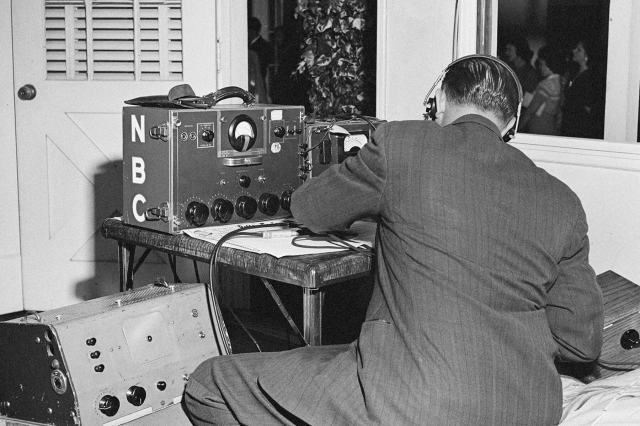
In 1926, RCA, the Radio Corporation of America, bought the radio station WEAF from AT&T and added the infrastructure to its New York and New Jersey station, WJZ. The combined assets established RCA’s broadcast network, dubbed the National Broadcasting Company, or NBC. On November 1 that same year, NBC officially became two networks: NBC Red (extending from WEAF) and NBC Blue (extending from WJZ). The upstart networks soon had a competitor. In 1927, frustrated talent agents Arthur Judson and George Coats resolved their inability to land a contract to get their clients work with NBC by forming their own radio network, United Independent Broadcasters. The network quickly changed its name to Columbia Phonograph Broadcasting Company after a merger with Columbia Phonograph and Records. Unfortunately for Judson and Coats, they were no more effective as would-be radio network moguls than they were as radio talent agents: The network operated at a loss, and it wasn’t long before Judson sold it to a relative who had been an initial investor, William S. Paley. On January 29, 1929, Paley shortened the network’s name to Columbia Broadcasting Company, or CBS.
The same year, NBC established the country’s first coast-to-coast radio infrastructure, but in 1934, antitrust litigation resulted in the FCC ordering the company to sell either the Red or Blue network. Years of appeals followed, finally resulting in NBC electing to sell the Blue network to Life Savers and Candy Company owner Edward J. Noble. Noble renamed it the American Broadcasting Company, and ABC was born.
A Ventriloquist Show Was One of Radio’s Biggest Hits
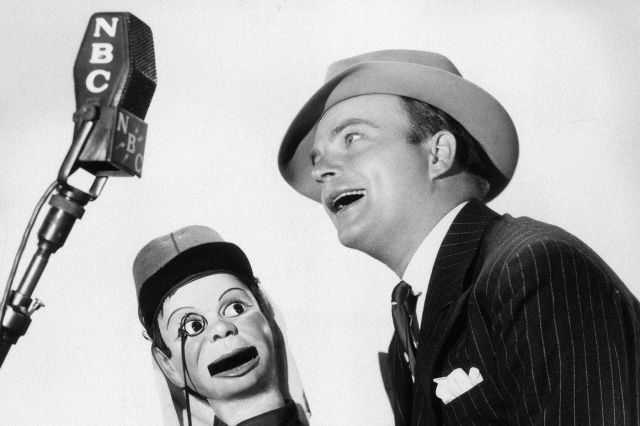
A form as visual and illusion-based as ventriloquism seems like a poor fit for an audio-only medium, but from 1937 to 1957, The Edgar Bergen and Charlie McCarthy Show was an American radio institution. It was the top-rated show for six years of its run, and in the top seven for all but its final five years. Ventriloquist Edgar Bergen started in vaudeville, and it was his guest appearance on Rudy Vallée’s Royal Gelatin Hourin 1936 that introduced him to the radio audience. The appeal of the show was Bergen’s vaudevillian skill at performing multiple comedic voices, and his quick and salacious wit as Charlie, roasting celebrity guests and using the dummy’s nonhuman innocuousness to get away with censorship-pushing double-entendres. Though the show included a live studio audience, Bergen all but dropped the traditional ventriloquism requirement of not moving his lips while voicing Charlie. As he reasoned, “I played on radio for so many years… it was ridiculous to sacrifice diction for 13 million people when there were only 300 watching in the audience
FM Radio Almost Didn’t Take Off
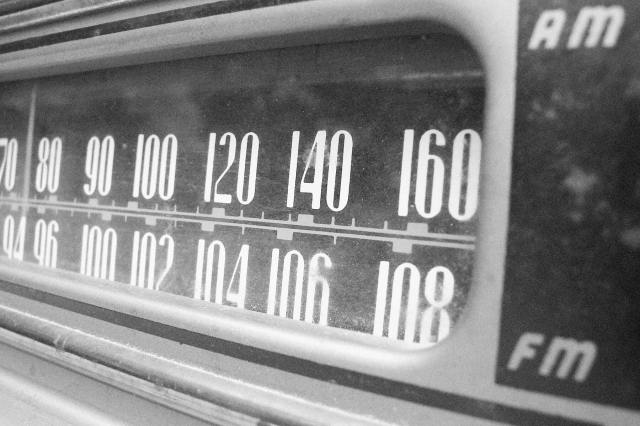
Inventor Edwin H. Armstrong earned prestige for creating the regenerative circuit in 1912, a modification to the vacuum tube that led to the dawn of modern radio. In the late 1920s, he set out to find a way to eliminate static from broadcasts, and received initial support in the endeavor from RCA President David Sarnoff. Sarnoff allowed Armstrong to use the RCA radio tower atop the Empire State Building to conduct experiments, and Armstrong agreed to give RCA first rights to the resulting product. When Armstrong demonstrated his static-free invention in 1935, what he unveiled was an entirely new broadcast technology using frequency modulation (FM) instead of the existing AM band.
Sarnoff, however, had wanted an improvement to AM, and saw FM as a threat to both RCA’s existing AM infrastructure and the emerging television technology RCA was investing in: He feared it would render AM equipment obsolete, and that FM radios would compromise the nascent market for television sets. Instead of embracing FM, RCA withdrew its support of Armstrong. With no support elsewhere in the broadcast industry, Armstrong set up his own fledgling FM station in hopes of promoting high fidelity radio, but he spent years in court mired in a byzantine tangle of regulatory and patent battles. FM eventually caught on, of course, but not until after radio’s golden age had passed: The FCC finally authorized an FM broadcasting standard in 1961.
The Last Shows of the Golden Age Ended in 1962
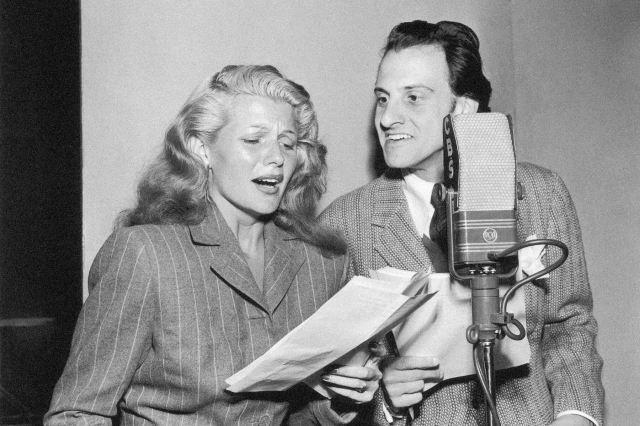
On September 30, 1962, the final two remaining scripted radio shows signed off for the last time on CBS. The detective series Yours Truly, Johnny Dollar ended a run that day that began in 1949, and mystery-drama Suspense ended a 20-year run that had begun on June 17, 1942. As evidenced by its longevity, Suspense was particularly venerable; it was a Peabody Award winner whose scripts drew from classical literature, stage plays and screenplays, and entirely original material. Suspense attracted top guest stars such as Humphrey Bogart, Bette Davis, Cary Grant, Bela Lugosi, Rosalind Russell, and James Stewart. CBS even produced a television adaptation that began airing in 1949, but it was canceled in 1954, outlasted by the original version on the radio.